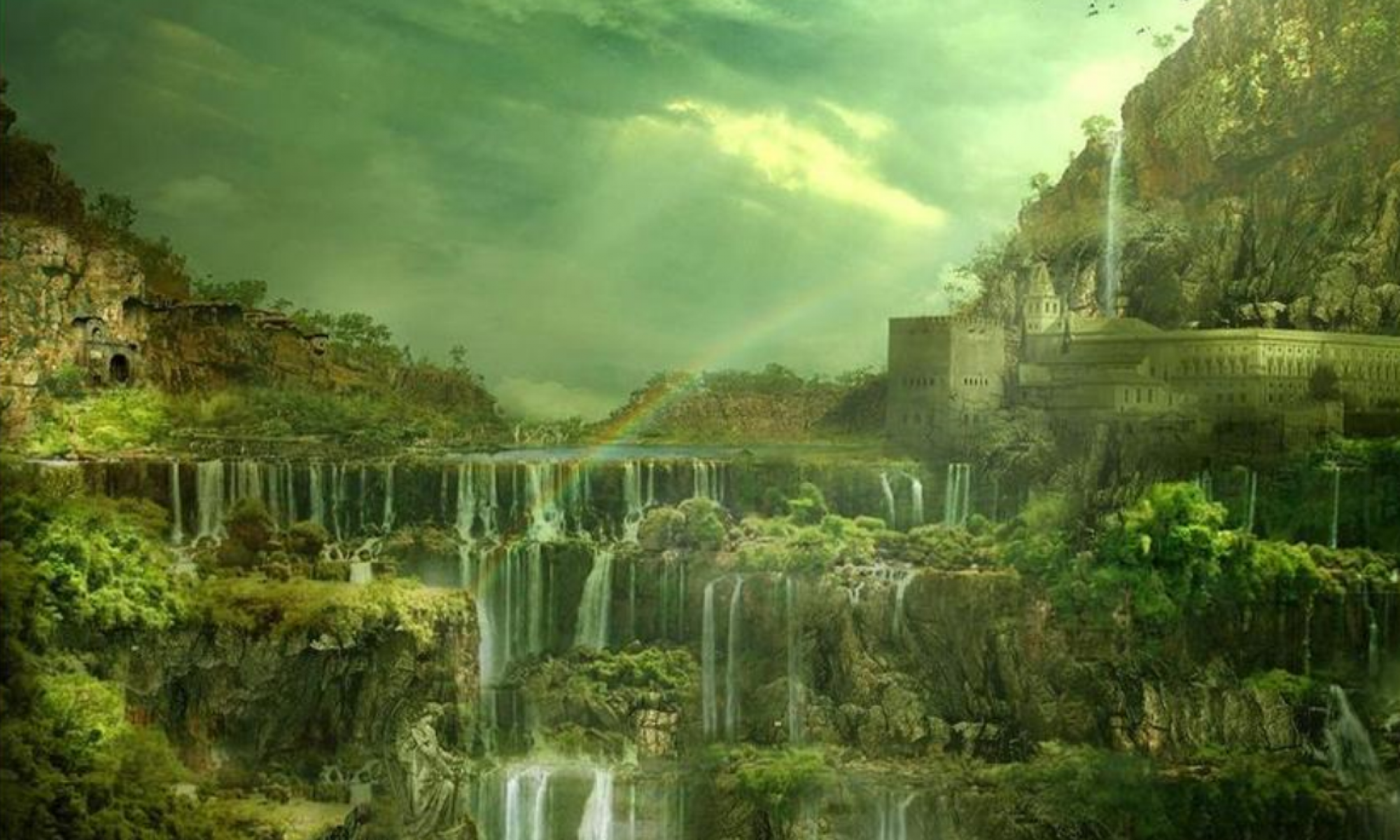
The Vision
Primal Landscapes creates a self-sustaining natural environment. Nature provides the foundation, and human artistic talent adds the final touch, with elements that serve us.
What makes this approach distinctive is that nature leads and human intervention follows. We cannot succeed by relying only on our intellect or on ready-made knowledge. By approaching nature without a rigid plan, and acting in tune with it, we allow it to show its full potential.
The benefit is double. Nature provides a growing part of what life needs: food, materials, shelter, beauty and the conditions for human wellbeing. Being in nature also reduces stress, improves mood and stimulates creativity.
Land Selection and Assessment
Everything begins with the place itself. Whether you already own the land or are looking for a parcel to buy, these are the factors to consider:
- Terrain: the shape of the land and how water moves across it.
- Soil: its condition and what it needs.
- Sunlight and wind: how they move through the property.
- Water: what is available and what must be provided.
- Existing vegetation and surrounding forests: what is already growing, and what lives around it.
- Climate: the local conditions the landscape must be able to withstand.
The best approach is to visit the property and assess all of this in person.
Soil Restoration
The goal is soil that is deeply alive and works naturally. The approach uses natural, non-animal-derived materials, chosen according to the condition of the land. These may include:
- Compost and plant residues: to contribute organic matter and support soil life.
- Microbial life and mycelium: to help establish the biological processes involved in nutrient cycling.
- Seaweed, Ormus and mineral amendments like rock dusts (e.g. zeolite): to contribute trace elements and minerals where needed.
- Biochar: a porous carbon material that can provide habitat for microorganisms and protect them from extreme weather when properly prepared and incorporated.
- Earthworms and other soil organisms: whose activity contributes to soil structure and nutrient cycling.
Once the soil is restored, it needs no fertilizers or manure, just as no wild forest tree does.
Establishing Biodiversity
Instead of plowing or tilling, a permanent green cover is established through a “smart” planting strategy that keeps the soil intact.
- Step one: a variety of seeds is broadcast in clay pellets. The clay protects the seeds while they germinate and begin to grow.
- Soil-preparing species first: the first plantings are species that improve the soil.
- Then variety: later plantings introduce more than 300 native and edible fruit trees, shrubs, climbers, perennials and annuals, creating a resilient ecosystem that suits the site.
- Endemic and edible, edible and non-edible: all are sown together, and nature itself decides what establishes, where it grows and how the ecosystem develops.
- Many layers: from canopy to ground cover, every layer plays its part.
- Fire safety: the species chosen are those that reduce the risk of fire.
We bring the seeds, and nature does the rest.
Trees and Planting Strategies
There are several ways to introduce trees and other plants, depending on the site and the goals:
- Method One, patience: broadcast clay pellets with endemic species only, and grow the desired fruit trees in a nursery at the same time. After one to three years, once the endemic flora is established, carefully transplant the nursery trees into chosen spaces, thinning wild growth where needed.
- Method Two, together from the start: if there are enough seeds, include fruit tree seeds in the first clay pellets. The seedlings are transplanted and thinned later.
- Method Three, quick impact: plant large trees and other chosen plants (herbs, flowers and so on) from a nursery, and broadcast pellets of soil-improving plants over the rest of the area. A nursery grown from seed supplies replacements for anything that fails.
Shrubs, herbs, ground covers, roots and climbing plants are introduced alongside the trees. Some trees can support climbers such as vines and kiwis.
Greenhouses and nurseries
- Nursery: for raising trees and plants for transplanting.
- Retractable-roof greenhouse: it opens during the day and closes at night, so plants receive the full solar spectrum and the rain. It is warmed passively by water or other natural heat-mass accumulators that store heat by day and release it at night.
Water and Natural Habitats
Water brings life to a landscape. Options include:
- Ponds and wetlands: for biodiversity and for enriching irrigation water.
- Two additional ponds: one for filtration and one for irrigation.
- Pond types: a small pond, a large natural pond, an elongated pond with a small bridge, or a natural swimming pond.
- Pond-side stream and water cascades: for movement, sound and beauty.
- An island for the animals: a safe place for wildlife.
- Where water is scarce: water-saving solutions, solar desalination and atmospheric moisture capture where necessary.
Landscape Design and Human Spaces
Places for people are woven into the landscape. They are not placed on top of it. Planting designs vary with the location and goals. A zoned design is one example:
- Outer zone: native and wild fruit trees for food and wildlife.
- Middle zone: a mix of fruit trees, some wild ones, edible understory plants, medicinal herbs, flowers and resilient vegetables.
- Central area: a multifunctional space for homes, greenhouses, nurseries, ponds, rock gardens, fountains and artistic landscapes.
Structures and places to relax
- Paths and benches: in selected locations.
- Shaded seating: a kiosk, gazebo or a pergola covered with climbing plants.
- Outdoor dining area and outdoor kitchen.
- Rustic structures: small buildings from natural materials such as adobe or stone.
- Tree house platforms: in the midst of the landscape.
- Open areas with a view.
- Rock gardens and waterfalls.
- Sheds: for tools and gardening equipment.
- Other structures: to suit your style, location and materials.
Natural Development and Maintenance
The landscape keeps changing and growing. As plants grow, they change their surroundings: they build organic matter, improve the soil, retain water, give shelter and create new conditions for other life. Gradually, a web of relationships develops between plants, fungi, microorganisms, insects, animals, water and thett atmosphere.
Human input is needed during the establishment. As the ecosystem develops, nature takes over more and more of the work, and the land builds its own fertility, resilience and ability to renew itself. In time, only minor tasks remain, such as laying dead branches on the soil so they decompose faster.
Experience and Sources of Knowledge
Primal Landscapes comes from five decades of living attuned to nature’s rhythms, and fifteen years of hands-on experimentation on various farms. This long relationship with nature has developed an intuitive ability to “listen,” which guides the choice of timing, seed types, quantities and natural additives.
The approach is based mainly on Masanobu Fukuoka’s Natural Farming. It also draws on permaculture and food forests, the various regenerative no-till methods, and the experience of other growers.
Ways of working together
- Consultation and recommendations only.
- Site assessment and a complete landscape design.
- Plant selection and sourcing guidance.
- Written instructions for your gardener or gardening team.
- Training your team in ecological landscaping methods.
- Periodic supervision while your team carries out the work.
- On-site implementation with my own team.
- Full implementation, from preparation through planting and establishment.
- Follow-up visits and advice as the landscape develops.
Interested in your own landscape? [Contact me] to arrange a conversation or a visit.